
Medicaid
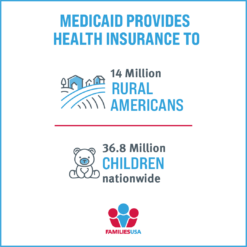
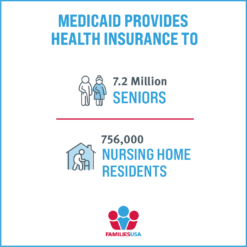
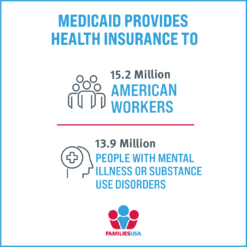
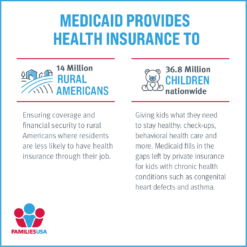
Medicaid provides health coverage for low-income children and adults, medical and long-term care coverage for people with disabilities, and assistance with health and long-term care expenses for low-income seniors. Nearly 59 million people rely on Medicaid services.
Medicaid is jointly funded by the federal government and the states. Each state administers its own program, and the federal Centers for Medicare and Medicaid Services (CMS) monitors the programs and sets quality, funding, and eligibility standards.
This section of our Web site provides resources on Medicaid laws and regulations and keeps you up-to-date on the battle to sustain and improve this important program.
Children receive health coverage through Medicaid and the State Children’s Health Insurance Program (CHIP). To learn more about CHIP, see the Children’s Health section.
The Latest
Medicaid and the Economic Recovery Package
Summary of Medicaid Provisions
- $87 billion for increased federal Medicaid matching rates through December 31, 2010;
- Every state receives a 6.2 percentage point increase in their federal Medicaid matching rate for expenditures between October 1, 2008, and December 31, 2010;
- States will also receive an additional boost in their matching rate based on their unemployment rate;
- States must maintain Medicaid eligibility and enrollment policies that were in place as of July 1, 2008, in order to qualify for the increased matching rate after July 1, 2009;
- Extends the moratoria on the following Medicaid regulations until June 30, 2009: targeted case management, provider taxes, school-based administration and transportation services. Also adds a moratorium on the hospital outpatient services Medicaid regulation through June 30, 2009, and includes a Sense of Congress that the Secretary of HHS should not promulgate regulations concerning payments to public providers, graduate medical education, and rehabilitative services;
- Extends Transitional Medical Assistance until December 31, 2010;
- Extends the Qualified Individual (QI) program (which helps certain low-income individuals pay their Medicare Part B premiums) until December 31, 2010;
- Increases funding to Disproportionate Share Hospitals (DSH) by 2.5 percentage points in FY 2009 and another 2.5 percentage points in FY 2010.
From Families USA:
Helping People with Long-Term Health Care Needs: Improving Access to Home- and Community-Based Services in Medicaid discusses how health care reform will give states incentives to strengthen home- and community-based services in Medicaid. (October 2009)
Medicaid and the Children's Health Insurance Program (CHIP) Soften the Blow during Tough Economic Times discusses how these programs have served as an effective health care safety net for many newly uninsured families, particularly for children. (October 2009)
CHIPRA: The Children's Health Insurance Program Reauthorization Act - A Series of Issue Briefs. In February 2009, after a protracted political fight, Congress enacted, and President Obama signed, legislation that renewed CHIP through the end of 2013 and expanded its scope. These issue briefs examine the new provisions that were included in the reauthorization and how they will affect implementation in the coming months.
Establishing a Consumer Health Assistance Program in Your Community: Consumer health assistance programs provide valuable services to people who have questions about health insurance (such as Medicaid or private insurance) or who are having trouble getting access to health care. For information on establishing such a program in your community, click here.
From the Children’s Partnership and the Kaiser Commission on Medicaid and the Uninsured
Why Express Lane Eligibility Makes Sense for States and Low-Income Families explains how Express Lane Eligibility would help states streamline enrollment and renewal of children in Medicaid and CHIP by coordinating across programs. The brief highlights the potential benefits of an Express Lane Eligibility initiative, including increasing access to care for low-income children, making coverage more stable, and reducing administrative costs. (October 2009)
From Health Affairs
Uninsured Adults with Chronic Conditions or Disabilities: Gaps in Public Insurance Programs discusses why an increasingly large number of working-age adults with low incomes and chronic health conditions or disabilities lack insurance. The brief argues that narrow eligibility requirements for Medicaid often exclude this vulnerable group. Expanding these requirements to ensure greater access to coverage should be a priority in national health reform. (October 2009) Subscription Required
From the Kaiser Commission on Medicaid and the Uninsured
Medicaid Home and Community-Based Services Programs: Data Update discusses the development of home- and community-based service (HCBS) alternatives to institutional care in state Medicaid programs. While the majority of funding for long-term care in Medicaid still goes toward institutional care, the percentage of total Medicaid spending on HCBS has more than doubled in the past 15 years. (November 2009)
Changes in Health Insurance Coverage, 2007-2008: Early Impact of the Recession indicates that the sharp decrease in coverage over this time period (1.5 million newly uninsured adults) was largely due to declines in job-based insurance. Coverage through public programs has bridged some of this gap, but increases in coverage for children were substantially larger than for adults. (October 2009)
Medicaid Beneficiaries and Access to Care examines Medicaid’s role in providing access to health care for low-income children and adults. The brief explains that Medicaid has increased access to care, provides comprehensive and affordable coverage, and addresses the special needs of its target populations. It also notes that health reform provides a unique opportunity to expand and strengthen access through Medicaid. (October 2009)
From the Kaiser Family Foundation
Racial/Ethnic Disparities in Access to Care among Children: How Does Medicaid Do in Closing the Gaps? examines how disparities among children in Medicaid compare with those among privately insured and uninsured children. The findings reveal that disparities in Medicaid were similar to those in the private insurance market, and although the majority of children fare well in terms of access, problems still persist for children trying to get access to the health care they need. (December 2009)
From the Kaiser Family Foundation and George Washington University Medical Center School of Public Health and Health Services
State Medicaid Coverage of Family Planning Services: Summary of State Survey Findings reports that there is great variation from state to state in what is covered under their family planning benefits. Some benefits include vaccinations, contraception, and screenings and treatment for sexually transmitted diseases and cancer, in addition to services that enable women to prevent unintended pregnancies, space pregnancies, and plan their family size. (November 2009)
From the Robert Wood Johnson Foundation
Assuring Health Coverage for Rural People through Health Reform compares health insurance trends of rural and urban residents. Rural workers tend to have less job-based coverage and pay more than urban workers for similar plans. Several provisions in the current health reform proposals, such as providing subsidies to purchase insurance and expanding Medicaid, would significantly benefit rural consumers. (October 2009)
From the Robert Wood Johnson Foundation and the Urban Institute
Progress Enrolling Children in Medicaid/CHIP: Who Is Left and What Are the Prospects for Covering More Children? notes that improving enrollment and retention processes and tailoring outreach strategies to uninsured children and their communities are crucial. The Medicaid expansion under health reform will also help increase enrollment, but continuing existing efforts will be key to preventing gaps in coverage. (November 2009)
[Return to top]