


Celebrating Key LGBTQ+ Figures in Health Care
06.16.2026
Pride Month is a celebration — and this year, making time for that joy is more important than ever.
The LGBTQ+ community is under sustained attack. Research into our health is being defunded. Medically necessary care is being restricted or stripped away entirely. Decades of progress on tracking and reducing health disparities is being dismantled in real time. For many in our community, these attacks are not an abstract threat — it’s a canceled appointment, a closed clinic, a prescription they can no longer fill.
This Pride Month, Families USA is honoring the activists, clinicians, and leaders who refused to wait for permission. Each of the figures profiled here overcame discrimination and dismissal to make access to health care safer and more equitable for everyone — and their example is exactly what we need in this moment, as we continue the fight.
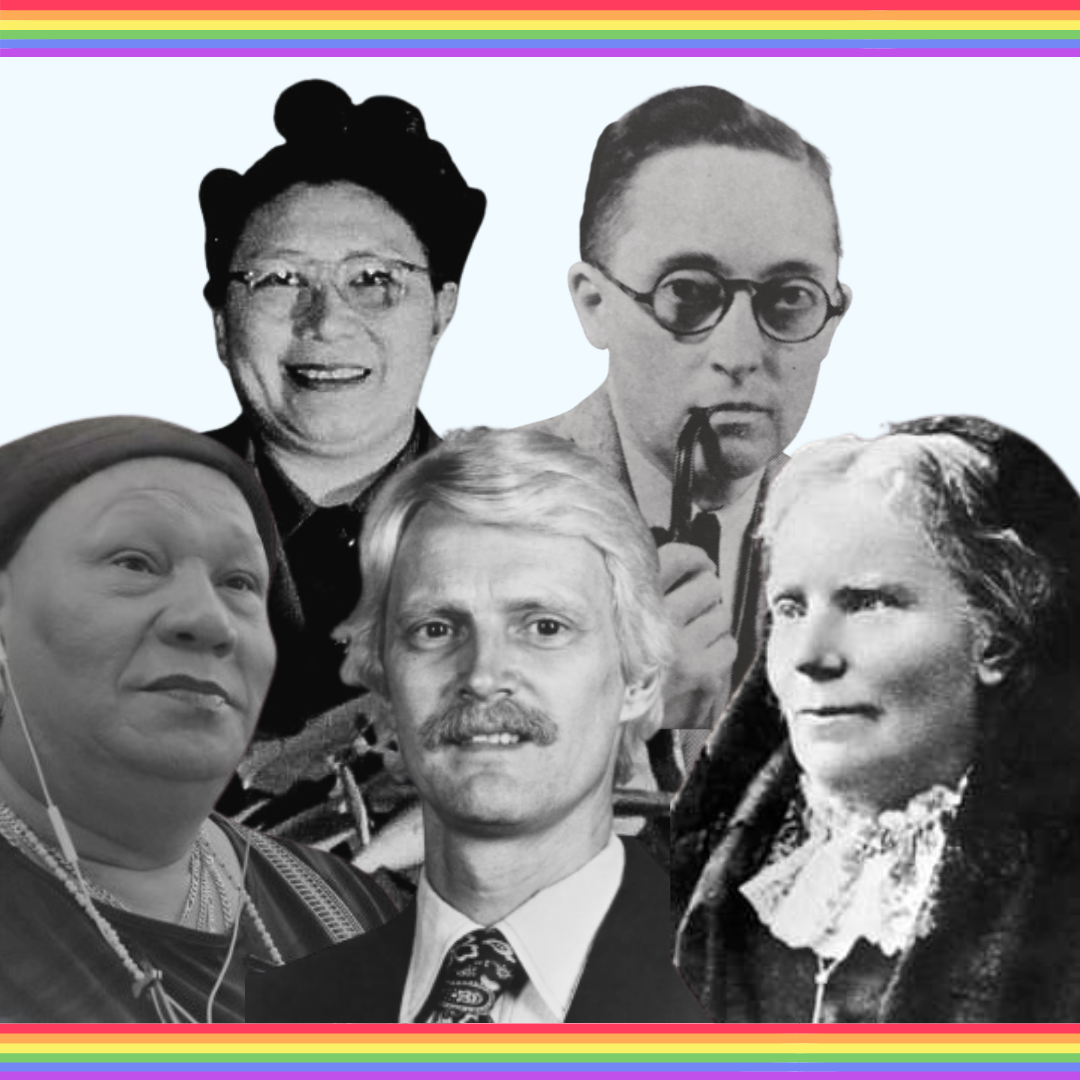
Dr. Emily Blackwell — Head of the first American hospital run by women, for women
Dr. Emily Blackwell (1826-1910) was a physician whose work is often overshadowed by her older sister, Elizabeth, the first American woman to earn a medical degree. But Emily’s work paved the way for hundreds of female doctors. Blackwell was rejected by eleven medical schools before finally receiving her MD in 1854. Two years after her sister Elizabeth and Dr. Marie Zakrzewska founded the New York Infirmary for Women and Children, Dr. Emily Blackwell took over as head of the institution.
She ran it for over 40 years, transforming it from a small facility in a 16-room home to a full hospital serving 7,000 patients a year by 1874. The Infirmary provided free care for women and children, a visiting nurse service to teach women about health at home, and a training program for female doctors. Over the course of its existence, 364 women earned their MDs at the hospital. Although Blackwell never publicly identified as a member of the LGBTQ+ community (since those terms were not yet widely used), she is often considered a key LGBTQ+ figure in healthcare by modern historians. She lived for almost 30 years and raised an adopted child with Dr. Elizabeth Cushier.
Dr. Alan L. Hart — Tuberculosis treatment innovator and early transgender doctor
Dr. Alan L. Hart (1890-1962) was a physician, radiologist, and novelist who pioneered the use of X-ray technology for tuberculosis detection that is still used today. From an early age, Hart identified as a man, and despite facing discrimination, he completed his medical degree in 1917 and began practicing professionally under his male name. However, Hart was outed by a former classmate in 1918 and driven out of his internship program, facing news headlines accusing him of being a woman disguising herself as a man to practice as a doctor more freely.
But Hart was not discouraged, telling a newspaper, “I have been happier since I made this change than I ever have in my life, and I will continue this way as long as I live.” He then began his most important work — treating tuberculosis patients with the new field of radiology. At the time, tuberculosis was one of the leading causes of death in the United States. Hart used radiology to identify the disease early, saving the lives of countless patients and preventing the disease from spreading.
Dr. Margaret “Mom” Chung — Influential physician and community leader
Dr. Margaret “Mom” Chung (1889-1959) was a physician born in Santa Barbara, California. While she was in medical school, Chung presented herself as a man. She applied to become a medical missionary but was rejected due to her race as a Chinese American. Instead, she opened her own clinic in San Francisco’s Chinatown. Although she was initially ostracized by her neighbors as a female doctor and because of rumors about her sexuality, she treated patients until the Japanese invasion of China in 1937, when she was asked by the US Navy to secretly recruit Chinese American pilots for what would become the famous “Flying Tiger” squadron.
Chung quickly built a network of American military men, politicians, and Hollywood stars, including Ronald Reagan and John Wayne. These men — and a handful of women including Amelia Earhart — became known as her surrogate children throughout World War II. Chung gained a position of prominence and trust in her community, providing care for other Chinese American women and women in the LGBTQ+ community who felt more comfortable with Chung. Although she never claimed the label of a lesbian in the face of significant discrimination, she had several romantic relationships with women and was trusted to provide competent care to lesbian women who traveled to see her.
Dr. Bruce Voeller — A groundbreaking welcome to the White House
Dr. Bruce Voeller (1934-1994) was a biologist, researcher, and activist. He received his doctorate in biology in 1961 and came out publicly as a gay man three years later. His most famous work began in 1973, when he co-founded the National Gay Task Force (later renamed the National LGBTQ Task Force). In 1977, the group was invited to meet with President Jimmy Carter, marking the first official discussion of LGBTQ rights in the White House. By the following year, the group had over 10,000 members.
Voeller coined the term AIDS (acquired immune deficiency syndrome) to replace the inaccurate term “Gay Related Immune Defense Disorder.” He also founded the Mariposa Foundation, which studied human sexuality and STI prevention, and Voeller widely promoted the idea that condom use could prevent the spread of HIV. Voeller became president of the New York Gay Activists Alliance (GAA), which introduced one of the first bills focused on gay rights in the nation. The National LGBTQ Task Force continues to work towards freedom and justice for all members of the community.
Lorena Borjas — The Guardian Angel of the Transgender Community in Queens
Lorena Borjas (1960-2020) emigrated from Mexico to New York City at age 21 to seek hormone therapy treatment. Borjas lived with other transgender women, often other Latin American immigrants, and started helping them and others in her community access gender-affirming health care. She and the other women that she helped faced significant struggles with abuse and exploitation, substance use disorders, and discrimination, and Borjas also lived with HIV.
She became a full-time activist in 1995, focusing on helping transgender women who had experienced violence or had been kicked out of their homes. Borjas worked tirelessly to connect people to social services and provide food, birth control, and shelter. She also facilitated HIV testing out of her own home. She founded the Colectivo Intercultural Transgrediendo, which still provides care and support for Trans and Gender Non Binary (TransGNB) people and is fondly remembered by many as the “guardian angel” of her community.
These figures represent some of the most important and hard-fought achievements in LGBTQ+ health care in America. Their example inspires us this month and beyond to continue fighting through the challenges that still stand between us and true health care freedom and equity for all.
related content
Celebrating Key LGBTQ+ Figures in Health Care
6.16.26 / Insights Blog
The Trump Administration’s Latest Attack on Medically Necessary, Gender-Affirming Care
2.17.26 / Insights Blog