



There’s peace of mind knowing that if I need to go get medical services, all I got to do is go.

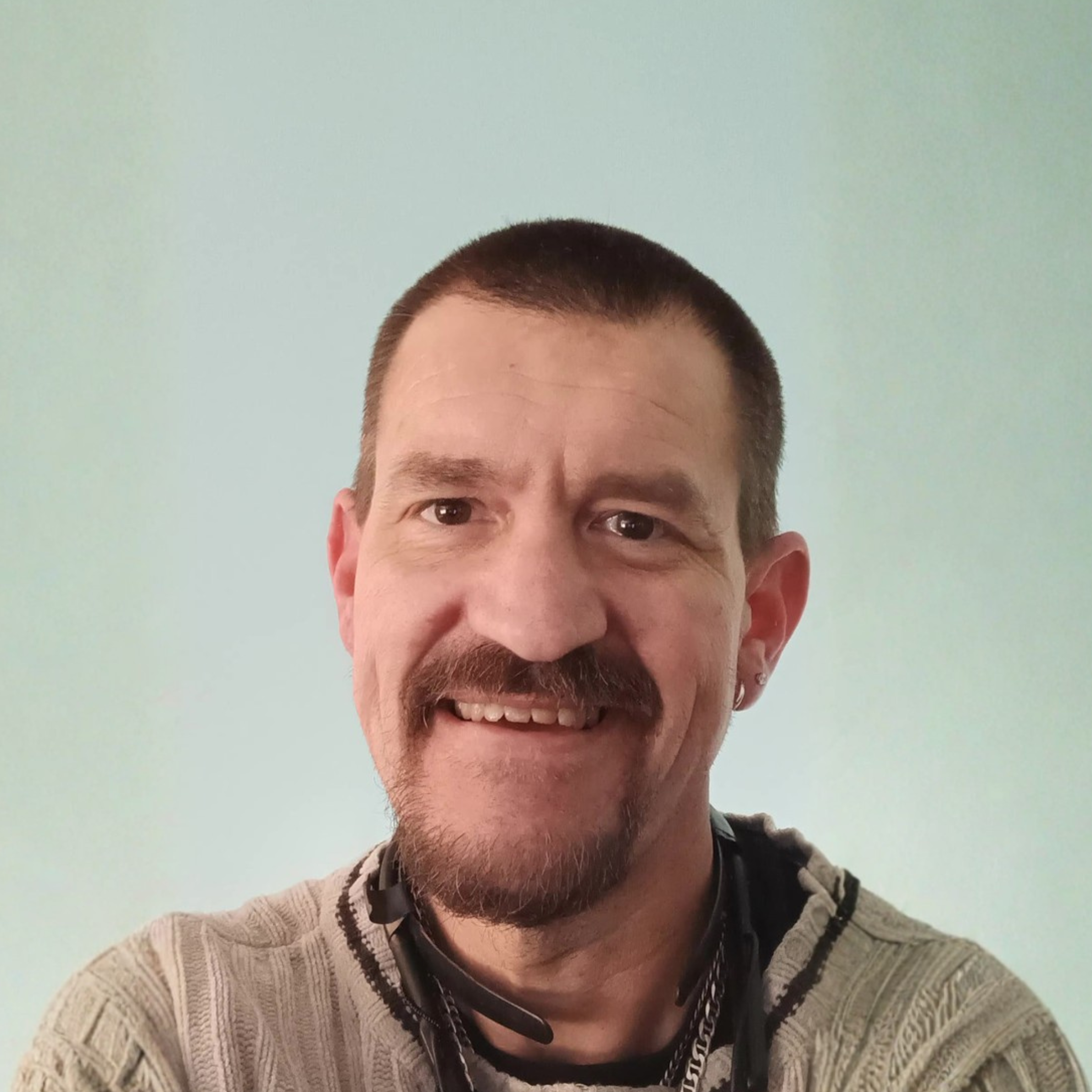
Paul Mikell is a 49-year-old resident of Stockbridge, Georgia — a caretaker, a mechanic, a gardener, and a hunter who has spent his life working with his hands. As a maintenance worker for his father’s property, his days are filled with oil changes, tending to the garden, house repairs, and whatever else the land and vehicles need. He grows tomatoes he sells at a small roadside stand, lives in a one-room studio apartment he and his father finished out of a converted storage building on the property, and hunts and fishes when the seasons allow. It is a self-sufficient life, built by hand — and for most of it, going to the doctor was not part of the plan.
For years, Paul operated the way many uninsured people do: avoid the system unless there is no other choice. When he dropped a battery on his foot and suspected a break, he bandaged it up and kept working. “I know it didn’t heal correctly,” he said. “I could go and get an x-ray and stuff like that, but I just don’t really want to, or you know, have the time.” He manages high blood pressure through diet and lifestyle changes alone, keeping it controlled well enough that when he underwent a Department of Transportation physical required to maintain his commercial driver’s license, he earned the maximum two-year certification.
Paul enrolled in Medicaid after applying for EBT benefits and deciding to see whether he might qualify. He did not expect to. In his experience, Medicaid was for people with minor children and no income at all. “If you make anything, then you’re not eligible,” he said. Years earlier in Florida — a state that has never expanded Medicaid — he had been denied coverage after losing his job during the recession because unemployment benefits counted as income. His eligibility there did not begin until the day those benefits ran out. Georgia has not fully expanded Medicaid either, but its partial expansion through the Pathways to Coverage program opened a door Paul did not know existed.
Coverage has made a real difference in how Paul navigates his health. When he hit a deer on his motorcycle last winter and the road rash on his arm became infected, he went to the emergency room without the fear of a catastrophic bill. The hospital treated the infection, identified a pinched nerve in his neck through an MRI, and set up a referral to an orthopedic specialist. “The referral, they pretty much handled everything,” he said. “It’s like they send the referral over and then the office will contact me and schedule an appointment.” By the time the physical therapy appointment was arranged, he had already regained full range of motion and did not need it — but the system had worked the way it was supposed to.
For routine care, Paul uses a walk-in clinic near his home. When a sinus infection flattened him, he pulled up the clinic’s availability online, picked a same-day slot, and showed up. The doctor called his prescription directly into the pharmacy. “I didn’t have to take a prescription there or anything,” he said. “They’d ask me what pharmacy I use, and they called it in and I just went and picked it up when it was ready.”
What Medicaid has given Paul is something harder to quantify than a copay or a prescription. “There’s peace of mind knowing that if I need to go get medical services, all I got to do is go,” he said, “and not have to worry about out-of-pocket payments and that kind of thing. He is candid about what remains undone. He knows he is overdue for a colonoscopy — the recommended screening age passed four years ago. He has been putting it off, and he is aware there are less invasive testing options available. For now, that is one more item on the list. But for the first time in a long while, the list feels like something he can actually work through — as long as his coverage holds.
To maintain his Georgia Pathways coverage, Paul must document at least 80 hours a month of qualifying activity to keep his coverage. His physically demanding work currently satisfies that requirement — but he is aware of how quickly that could change. “If I were injured, I don’t know how I would get health care,” he said. “I probably wouldn’t have any at all. So, I have to hope that I won’t become so injured that I won’t be able to meet my work requirements.”
Prior to October 2025, Georgia Pathways enrollees were required to verify their qualifying activities every month — a burden Paul felt firsthand. “Before I was having to report monthly, and that was a big issue,” he said. For someone whose income is informal, whose employer is his father, and whose work leaves no pay stubs, proving eligibility has never been simple. That reality nearly cost him his coverage when a documentation error turned out to be a system failure. He eventually reached someone on the 800 number who reviewed his file and resolved it on the spot. “She said, ‘I see no reason for you to lose your eligibility — you provided everything you needed to provide,'” he recalled. “She fixed it all right there, but it was like last minute. I was just about to lose everything.” The near miss was not the result of doing anything wrong. It was the result of a system that is easy to fall through.
Georgia has since shifted to annual reporting, a relief that may be short-lived. Under HR1, Georgia will likely need to require verification every six months starting in 2027, a step back from where things stand today, even if still an improvement over the monthly reporting that nearly cost Paul his coverage.
For Paul, the stakes are not abstract. He is a man who has spent his life finding ways to get by — bandaging his own foot, managing his blood pressure through sheer discipline, going without care rather than face a bill he cannot pay. For most of his life, staying healthy meant staying lucky. Medicaid changed that equation — and he is not ready to go back.
Add your voice to help us continue to push for the best health and health care for all.
SHARE YOUR STORY