


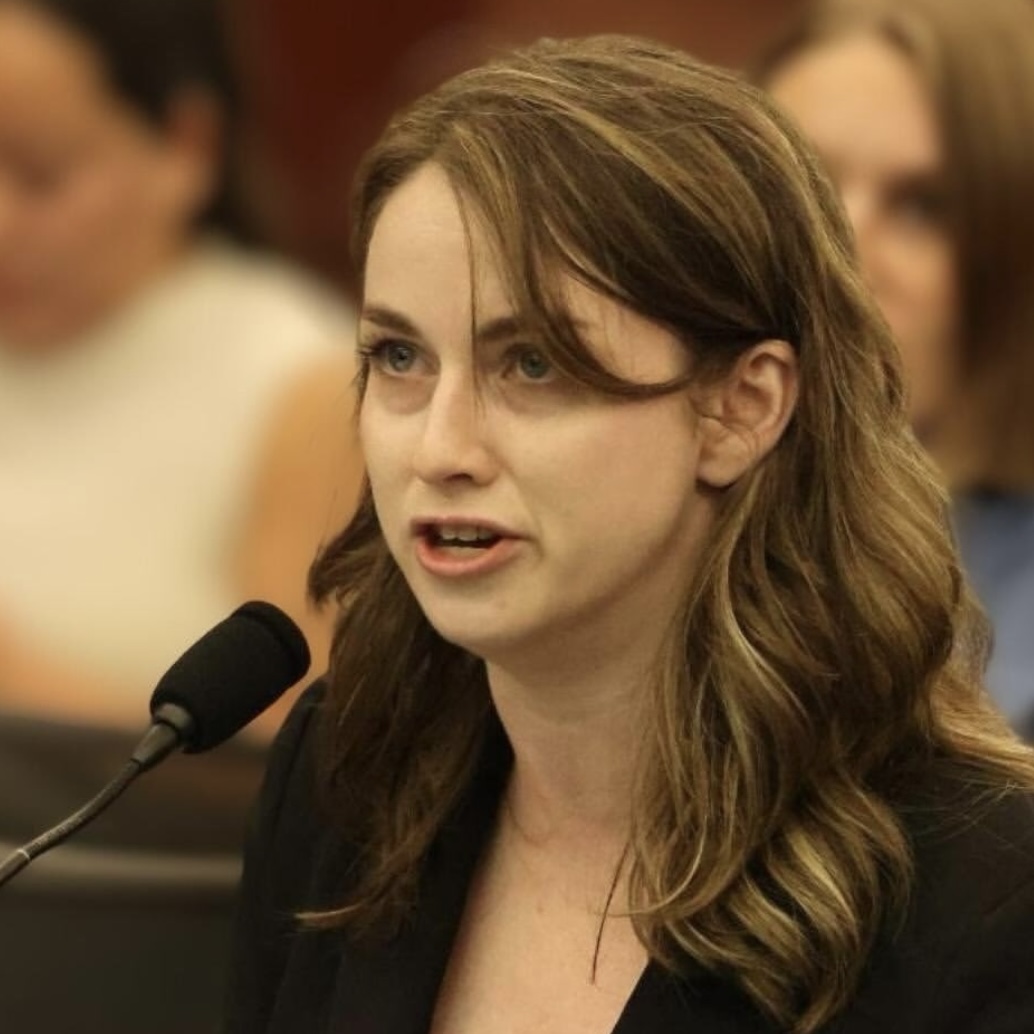

This isn’t about politics. It’s about people like my brother, my neighbors, and millions of working Americans who depend on affordable coverage to stay healthy and to care for the people they love. We cannot trade their health and security for tax breaks for the wealthy.

Mariah Plante works full time in rural Wyoming County, West Virginia, while serving as the primary caregiver for her older brother, Matt. Matt is legally blind, has nonverbal autism, and needs help with nearly every aspect of daily life.
For Mariah, Medicaid is not an abstract government program. It is the reason her brother gets to live at home, cared for by people who love him.
Medicaid covers Matt’s medical care, prescriptions, eyeglasses, and behavioral support services they could never afford on their own. It also saves the government thousands of dollars each year compared to the cost of a state hospital or assisted living facility. But for Mariah, the case is simpler than any budget comparison. “Medicaid allows him to live at home,” she said, “surrounded by people who love him instead of in a facility where staff are often overworked and under-trained to care for people with complex needs.”
While her brother’s stability depends on Medicaid, which faces ongoing threats under H.R. 1, Mariah manages her own health needs through an ACA Marketplace plan. That affordable coverage was upended when Congress failed to extend the enhanced Premium Tax Credits. The credits had been covering about 77% of her premium, reducing her monthly cost from $829 to $218 and making it possible to maintain coverage while caring for her brother. Without that support, her costs increased sharply. “That’s a devastating hit for working people like me,” she said.
She is not alone. Across the country, families are feeling the same strain.
The consequences reach beyond household budgets. At least seven rural hospitals in West Virginia are now at risk of closure under H.R. 1, including Welch Community Hospital, the closest facility to Wyoming County. In communities where the nearest specialist can already be 100 miles away, losing a local hospital is not an inconvenience. It is a life-or-death calculation.
Through it all, Mariah has refused to let her community be written off. “This isn’t about politics. It’s about people like my brother, my neighbors, and millions of working Americans who depend on affordable coverage to stay healthy and to care for the people they love. We cannot trade their health and security for tax breaks for the wealthy,” she said.
In early 2026, Mariah offered a brief update on where things stand. “We’re muddling through,” she said. Matt’s Social Security Disability claim is now on its third denial appeal, extending an already exhausting process.
Mariah had to repurchase her Highmark Gold plan, and the monthly premium is now $301.57 about $75 more than she was paying the year before. That does not include her prescription medication, which continues to cost $150 a month out of pocket. Together, those costs exceed $450 a month before she has accessed any care.
For a working caregiver in rural West Virginia, the strain is not temporary. It is ongoing. Mariah Plante is living that reality in real time.
Add your voice to help us continue to push for the best health and health care for all.
SHARE YOUR STORY