



This is not an isolated case. This is what health care in this country looks like for too many families — overcomplicated, unaccountable, and indifferent to the people it is supposed to serve.

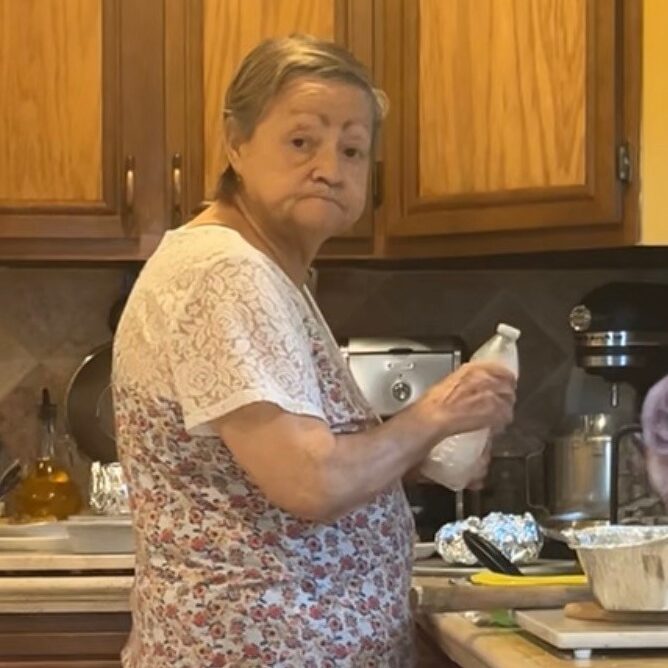
Leo Reyna’s late mother, Liliana Zelaya, came to the United States from Honduras before he was born. She and her sister became citizens, found factory jobs and built a life in the suburbs of Chicago. For decades, she worked with a dedication to providing for her family.
Her joy was food. She made lasagna and spaghetti that her grandchildren still talk about. Leo’s personal favorite was her chili. She was sarcastic, stubborn and direct and she showed her family her love through cooking, small actions and being there.
Liliana trusted that when she needed the health care system, it would be there for her. She had insurance. She had a primary care physician. She had a son who would eventually spend hundreds of hours on the phone trying to get her the care she deserved.
None of it was enough.
Leo’s mother was first diagnosed with liver cirrhosis in 2016. After a colonoscopy and a liver ultrasound in late 2022, she received no further liver surveillance — no blood work, no imaging, no referrals to a specialist. Her primary care physician, who controlled all specialist referrals under her Cigna Medicare Advantage plan, did not send her to a hepatologist or back to gastroenterology. In 2023, there was no monitoring of any kind.
Under a Medicare Advantage plan, patients very often cannot simply seek out a specialist on their own. In these cases, referrals must flow through the primary care physician, who coordinates with the insurer before any specialist can be seen. For Leo’s mother, that gatekeeping function failed completely. “The PCP controls all the referrals,” Leo said. “She cannot just go to any doctor she wants.”
Leo’s mother did not fully understand the severity of her cirrhosis diagnosis. She had been told she had the condition, but the conversation had ended there. No one explained what it meant for her long-term health. No one told her what to watch for, or what tests she should be receiving. “My mom never knew how bad it was,” Leo said. “You’re told you have this, but then that’s when the conversation ends. So how is my mom supposed to know what test she’s supposed to be getting? That’s why she has a primary.”
In July 2024, abnormal blood work prompted an oncologist to tell the family that Leo’s mother needed a liver specialist. But no formal referral followed. No note was sent to her primary care physician. The family left the appointment without a next step and without understanding the urgency of what they had just been told.
By March 2025, Leo’s mother was in severe abdominal pain. The family took her to the emergency room, where a CT scan raised the possibility of liver cancer alongside pancreatitis. She was sent home and told to follow up with her primary care physician. Her condition worsened overnight and the family returned the next day. She was admitted, but the medical team focused primarily on the pancreatitis. No liver specialist was consulted.
When the team recommended an MRI, they said it could be done outpatient and discharged her before it was scheduled. Weeks passed before the MRI was completed on May 9. It revealed multifocal advanced-stage liver cancer. By that point, Leo’s mother had gone years without liver surveillance and months without a clear diagnosis. She did not receive treatment until October 2025 — seven months later. She was gone three months after that.
What happened to Liliana was not one failure. It was many failures, across many systems, over many years. And Leo was the one left to navigate all of it — making the calls, sending the emails, obtaining authorization numbers to prevent appointments from being canceled, downloading his mother’s own scan results and sending them to her doctors himself.
With a diagnosis finally in hand, Leo began calling Cigna to find a covered hepatologist. What followed was weeks of contradictory information that would delay his mother’s access to specialist care and ultimately cause the family to make treatment decisions based on inaccurate cost estimates.
Each time Leo called Cigna to verify whether a specialist was in-network, he received a different answer. A physician listed as in-network one day was listed as out-of-network the next. One supervisor told Leo that a particular doctor at one Northwestern Medicine office location was in-network. Another representative said it was a different location. Leo kept written notes of every call. “When you see it on paper, you will be like, wow,” he said.
Based on Cigna’s assurances that a Northwestern hepatologist was in-network, Leo drove his mother — who was increasingly unwell — an hour and a half from their suburb to downtown Chicago for a June 11 appointment. At check-in, the registration desk informed them the visit would be billed as out-of-network. No one explained what that meant financially. No supervisor was called. No one offered an out-of-network cost estimate or walked the family through their options. Leo’s mother signed a consent form and the appointment proceeded.
When Leo later tried to schedule the CT scan the specialist said she needed, it immediately triggered an out-of-network alert. The cost would be approximately $3,000. “We don’t know what’s going on with her liver,” Leo said. “So we went ahead.”
Weeks passed as Leo tried to resolve the situation. He called Cigna. He called Northwestern. He escalated to supervisors and grievance teams. Eventually Northwestern’s vice president of revenue confirmed what multiple Cigna representatives had failed to acknowledge: Northwestern had no contract with Cigna. Every doctor in their system was out-of-network. The assurances Leo had received were wrong.
After months of phone calls and filed complaints, Cigna’s grievance team helped Leo find a hepatologist at Loyola Medicine. The appointment was nearly canceled the day before it was scheduled because Cigna had not processed the required authorization, despite a nurse case manager’s assurance that she had handled it. Leo called again. Someone intervened. The appointment proceeded.
At the July 9 hepatology appointment, the doctor had not received the May MRI results. Leo had to pull them up on his phone to show the specialist what was going on with his mother’s liver. A CT scan was ordered, but when the family arrived for that appointment on July 22, the hospital told them, once again, the authorization had not come through. Leo called Cigna from the facility and obtained an authorization number. A hospital representative told him directly: if the code turned out to be wrong, the family would be responsible for the cost.
The CT scan sat unread for eight days.
During this period, Leo and his mother were also navigating contradictory information about what her treatment would cost. A Cigna nurse case manager told Leo that his mother would be responsible for 20 percent of all procedures and medications. That figure alarmed the family deeply. They began exploring fundraising options. They paused. They tried to figure out how they could possibly afford treatment.
Later, a member of Cigna’s grievance team offered an entirely different explanation: because his mother had already met her annual deductible of $2,350, she would owe nothing further out of pocket. The two explanations directly contradicted each other. No one at Cigna acknowledged the discrepancy or helped the family understand which answer was correct.
The confusion contributed to the family’s decision to leave Loyola and pursue care at Rush University Medical Center instead — a transition that added more time to an already dangerous delay. From March 2025, when his mother first went to the emergency room, to October 2025, when she finally received her first treatment, seven months passed. “This whole time, we have no idea what’s going on,” Leo said. “Time’s wasting.”
Even after the family moved to Rush, the authorization failures continued. Every appointment carried the same threat of cancellation. Every call Leo made to fix what should have already been handled was another hour he could not get back, another reminder that the system required him to fight for care his mother simply deserved to receive.
The Y90 radioembolization treatment was finally administered October 21, 2025 — seven months after Leo first brought his mother to the emergency room in pain. It did not work. By December, she had deteriorated sharply. The family moved to hospice care at home. On January 18, 2026, Liliana Zelaya passed away. She was 74 years old. “She’s only 74 years old,” Leo said. “My grandma, her mom, died when she was 97 years old. She could have done that.”
Leo has continued to pursue accountability even after her death, because he does not know what else to do with everything he witnessed. He eventually connected with Cigna’s chief medical officer, who called to apologize and told him that Cigna had been aware of his mother’s case since July 2025 — months before she died, and months into the ordeal Leo had been fighting through alone.
“That’s very, very, very disheartening,” Leo said, “because you have no idea how much we’ve been through.”
When Leo looked for accountability, he found none. Law firms calculated the return on investment of his mother’s life and passed. Politicians sent form letters or said nothing. Oversight agencies told him they could only recommend — not act. Every door he knocked on redirected him to another door. He has requested call recordings from Cigna since July 2025 and has not received them. The transcripts the insurer provided contain errors and missing entries, and when he raised these concerns, he received no acknowledgment. The relentless pattern of misinformation, canceled appointments and unanswered calls took a profound toll. He has not been able to work since before his mother became gravely ill, is living on savings and is working through everything he witnessed in therapy. But he has not stopped fighting.
“I did everything I could,” Leo said. “It was not enough — not because I did not try, but because the system failed us at every level … I have records. I have documentation. I have proof of something,” Leo said. “What I do not have is anyone willing to do anything about it.”
Through all of it, Leo never lost sight of who he was fighting for — not a claim, not a file, not a Medicare Advantage enrollee, but his mother. “My mom came to this country, did everything she was supposed to, paid her taxes, became a citizen, did everything that she was supposed to,” Leo said. “Connect the dots and the picture is clear. This is not an isolated case. This is what health care in this country looks like for too many families — overcomplicated, unaccountable, and indifferent to the people it is supposed to serve.”
Add your voice to help us continue to push for the best health and health care for all.
SHARE YOUR STORY