



Blocking our elders from access to basic care at the time in their life when they need it most and are most vulnerable and putting that pressure on working-age families is unacceptable.

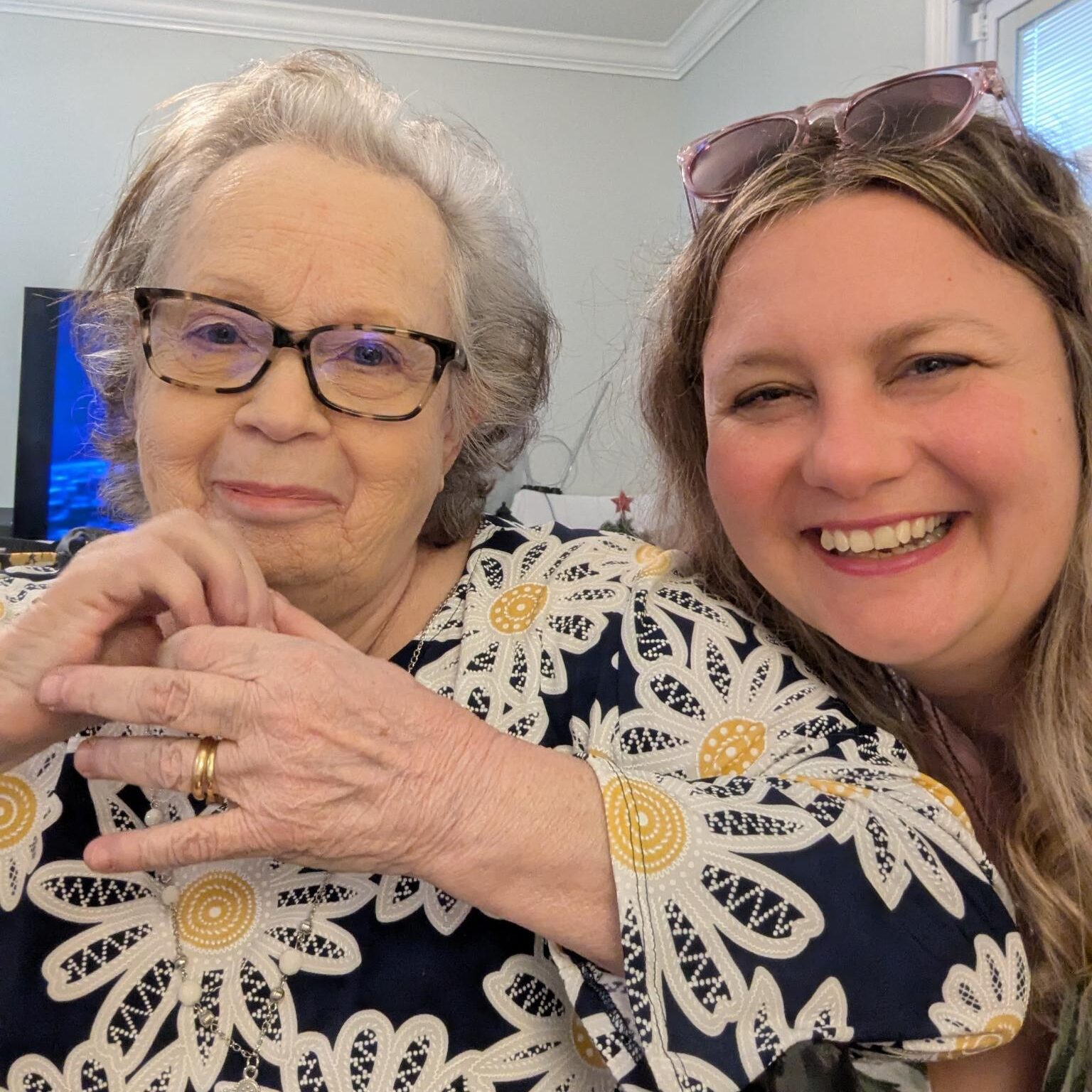
Hannah Bink never expected to become a care coordinator, benefits navigator, and family mediator all at once. But as her grandparents’ health declined, that is exactly what she became.
Her grandparents live in Charleston, South Carolina. Her grandmother, a retired North Carolina state government employee with decades of service, has dementia, has suffered four strokes and two heart attacks, is incontinent, and can no longer stand. Her grandfather has Parkinson’s disease, significant vision loss, and use of only one hand. He becomes overwhelmed by complex decisions and cannot safely leave his wife alone. That means he cannot shop for groceries, attend appointments, or manage the growing administrative demands of their care.
Until recently, her grandmother received hospice care for about thirty minutes a day, five days a week. Everything else, including hygiene, supervision, meals, cleaning, medications and care coordination, fell to family members.
After her most recent heart attack, her grandmother came home with a feeding tube. That change disqualified her from in-home hospice care.
Now, in addition to bathing and supervising her grandmother, family members must clean and maintain the feeding tube multiple times a day and administer medications through it. None of the in-home aides are certified to handle feeding tube care.
Hannah interviewed six in-home care companies in the Charleston area. Only two accept Medicaid. The family hired one of those two in hopes of maintaining continuity once approval comes through. Until then, they are paying more than $3,000 a month out of pocket for five days a week of help.
“I’m now cutting into my savings so that my grandmother doesn’t lie in her own filth and can eat,” Hannah said.
Her grandparents have Medicare, but it does not cover long-term in-home care. Both qualify for Medicaid, yet neither was enrolled. Despite having social workers assigned to them, no one initiated an application. Because her grandparents lack the capacity to apply themselves, Hannah stepped in.
She traveled to South Carolina to begin the Medicaid process and found the state’s online portal down for weeks. She applied by phone instead, which required continuing the process on paper. Her grandparents do not have a printer or copier, and her grandfather struggles to locate important documents. Then, a scheduled home visit from social services that was supposed to help them navigate the process was derailed when her grandmother was hospitalized again. Months later, the application remains pending.
“This is a whole job,” Hannah said. “Most families don’t have someone who can navigate bureaucracy, coordinate seven adults, front thousands of dollars, and keep going without burning out.”
Coordinating care also means coordinating their blended family spread across multiple states. Her grandparents had children from previous marriages, Hannah shared, “They did not grow up together and do not naturally operate as a unit. They are now being asked to make urgent and emotionally charged decisions across state lines while managing their own jobs, children and financial realities.”
Over two decades of medical debt, Hannah has watched her grandparents’ financial stability erode. They sold their home in North Carolina and moved to Charleston to be closer to family, renting for the remainder of their lives. Her grandfather likely qualified for Medicaid years ago given his disability, but no one told them what programs existed or how to plan ahead. “No one intervened at any point to say there are programs you qualify for or there’s things we can get ahead of,” she said.
Hannah’s story illustrates how policy and bureaucracy often fail families when they are most vulnerable. Without clear guidance, adequate support, or accessible resources, working-age caregivers are forced to shoulder complex medical, financial, and emotional responsibilities with little help, showing that when caregivers break, the system breaks first. “Any system that profits off the sustained vulnerability of its consumers is inherently unethical,” she said.
Her message to lawmakers in North and South Carolina is clear.
“This is not a story about one family’s bad luck. It is what happens when a system designed on paper collides with real human limitations like cognitive decline, physical disability, fractured families, geographic distance, and finite money. The system assumes someone else will fill the gaps … Blocking our elders from access to basic care at the time in their life when they need it most and are most vulnerable and putting that pressure on working-age families is unacceptable. We should not punish you for living a long life. You should not be punished for simply aging.”
Add your voice to help us continue to push for the best health and health care for all.
SHARE YOUR STORY