



If they can do this to a 44-year-old man who has had a stroke, what are they doing to the elderly patients and family members who are more vulnerable?

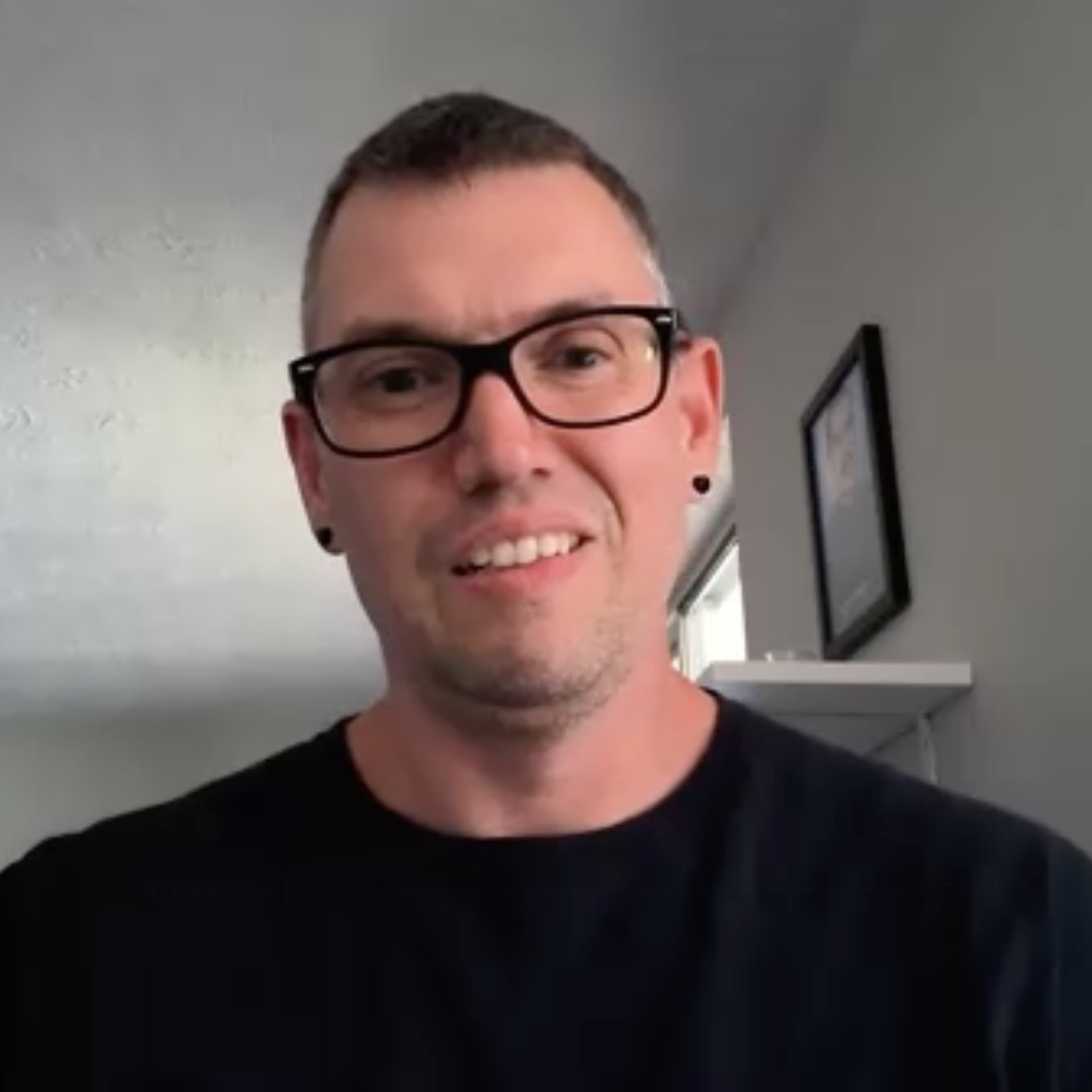
Bill McAdams spent 13 years as an emergency room nurse. He held the hands of dying patients. He stabilized trauma cases before they ever reached a specialist. He built a career out of caring for people at their most vulnerable. He never imagined that when his own crisis came, navigating the health care system would become the source of his greatest harm.
In September 2025, Bill had an ischemic stroke.
At the time, he had no health insurance. His staffing agency had offered him coverage, but the premium was quoted at $5,200 a month for his family, or $3,600 for just him and his wife. As a travel nurse, he was responsible for the full cost. The family had been looking into supplemental insurance but hadn’t decided in time.
While working as a travel nurse on assignment in Indiana, Bill woke from an afternoon nap and rolled out of bed — straight onto the floor. He couldn’t move his right leg. His left leg barely responded. He knew immediately what was happening. With quiet determination, he braced himself up on his elbows, pulled himself upright, and called out to his 23-year-old son, who was staying with him.
A CT scan at University of Louisville Hospital revealed a left carotid dissection. He underwent emergency surgery to get a stent placement and a thrombectomy. But 24 hours later, the stent fully occluded. It has remained blocked ever since, leaving Bill with altered blood flow to his brain, a left basal ganglia stroke, right-sided weakness, aphasia, and a long road of recovery ahead.
When he woke from sedation, the first thing Bill thought about was his wife. “I was more worried about losing everything that we had worked so hard to achieve,” he said. “I apologized to my wife for having a stroke because I didn’t know when I would be able to work again.”
Then the bill arrived. $389,170 adjusted down to $93,400.
As a nonprofit hospital, UofL operates a charity care program intended to help uninsured patients. Bill knew this, and he set out to navigate it. He tracked down the ambulance service on his own after receiving no bill, calling repeatedly over two months before reaching someone who could set up a payment plan. He set up a separate plan for the physician group through the hospital’s online portal. When the hospital invoice arrived at his Florida home in October, he called billing the same day.
But when he asked to set up a payment plan, he was told he would first have to apply for financial assistance, and that any plan of that size would require management approval.
Bill filled out the application and mailed in pay stubs for both himself and his wife, along with a letter explaining that he was no longer working due to his recovery and that his wife’s income as a nail technician was variable. She works on commission. No customers means no income. He sent three months of stubs, wanting to give the clearest possible picture of their finances. He disclosed to every representative he spoke with that he had had a stroke. “I think that part of me was embarrassed,” he said. “I still had my intelligence. It just took more time for my brain to process.”
He was denied.
The denial letter stated that the family earned too much. When Bill called to ask how that figure was calculated, he was told the department had used only the last two pay stubs — not the three he had sent. The representative said they had never requested three. Nothing on the application specified how many were required. He also later discovered that the hospital’s own policy required denial letters to include information about the patient’s right to appeal. His letter contained none.
“I felt stupid and ashamed,” he said. “I’ve been a nurse for 13 years, but I’ve never dealt with the billing side of things.”
Through the fall and into January, Bill made call after call to billing and financial assistance, leaving messages, calling back on the days he was told to call back, and navigating representatives who gave him different information each time. He offered a $20,000 lump sum settlement — all of the family’s emergency savings. The hospital declined. Billing called back with a counteroffer: a 25% discount if he paid $20,000 down and $1,000 a month after that, an impossible expense for the family to cover.
He broke down crying on the phone. His wife was the only one working. He didn’t know when — or whether — he would be able to return to nursing. “My wife and I do own our house,” he said. “I was afraid we’d lose our house.”
Bill filed his appeal on February 1, 2026, submitting a new application, a personal letter, his wife’s 1099 showing she had earned less than the figure used to deny him, updated bank statements, and a letter from his employer confirming his last day of work — which he had requested on November 19 and which was submitted to the financial assistance department on November 21. When he asked for a patient advocate to help him through the process, a financial assistance representative responded: “What do you need a patient advocate for? You just have to fill out the application.”
“I hope that they don’t treat all of their stroke survivors like this,” he said.
Meanwhile, his physical recovery was quietly unraveling. Through January, he had been going to the YMCA and walking in the park daily. But as the billing battle wore on, he grew more fatigued, more lightheaded, less able. By March, he felt as though the ground was moving in waves beneath his feet when he walked.
On March 15, while his appeal was still pending, a bill arrived from UofL stating he was now delinquent and that the hospital might take “other extraordinary measures” to collect. Federal law requires nonprofit hospitals to give patients with pending financial assistance applications 240 days before collection action. The letter arrived well within that window.
The next morning, his speech had changed. He knew something neurological had happened. He still did not go to the emergency room. “I feared the stress of going through more trauma caused by them than I feared the repercussions to my health,” he wrote.
On March 25, two representatives from the same department contacted him the same day with contradictory information: one emailing to say his appeal was under review by management, another calling to say his denial still stood and that their records showed he made $111,000 a year. He had not worked since before his first stroke.
The next morning, March 26, 2026, Bill called to file a formal grievance. The call lasted 18 minutes. The more he spoke, the more distraught he became.
When he hung up the call and stood up from the table, a yellow line cut across his vision. Then came static — millions of tiny colored pixels filling his visual field. Then dizziness, blurry vision, numbness along the left side of his scalp and neck.
He knew he was having another stroke. He still hesitated to call for help. “I felt like a hypocrite for all of the times that I taught patients education on what to do when you have stroke symptoms…. It wasn’t until I started having an overwhelming sense of doom that I decided to contact my wife,” he said. “I started to think about my vision and if it were to get any worse, I wouldn’t get to see the birth of our child.”
At Morton Plant North Bay Hospital near their home in Holiday, Florida, Bill received compassionate, thorough care that began to restore his trust in the system. But before he was discharged, a hospitalist told him he should never have been placed on fluoxetine during his first hospital stay. The antidepressant, prescribed as part of a stroke recovery trial, has a major drug interaction with clopidogrel — the blood thinner he was also taking — making it less effective at preventing clots and putting him at elevated risk for another stroke. “I was never told about the major drug interaction,” he wrote. “I was very hesitant to be put on the medication because I wanted to be on the least amount of medication necessary.” A resident doctor had approached him several times before he agreed to take it.
Since his second stroke, Bill has been applying for Social Security disability, continuing his charity care appeal, filing a complaint with the Kentucky Attorney General’s office, and reaching out to attorneys — most of whom said the situation was too complex or outside their scope. He has done all of this while managing daily fatigue, right-sided stiffness and tremors, slowed gait, and a possible diagnosis of vascular Parkinsonism, while his expecting wife works as the family’s sole earner.
Recently, Bill formally resigned from his nursing position. He had held onto it since his first stroke as the last piece of himself.
He has not yet received resolution.
“Over the past 6 months my mind has progressively deteriorated,” he said. “I don’t feel human anymore. I don’t feel normal.” He described his brain as a hallway full of rooms with empty filing cabinets — constantly searching for what it needs, unable to find rest.
He is 44 years old. He is proud of what he built. And he is clear about what failed him.
“I was failed by the hospital itself,” he says. “Not by the doctors, the nurses, the support staff. If they can do this to a 44-year-old man who has had a stroke, what are they doing to the elderly patients and family members who are more vulnerable?”
What Bill wants now is accountability. He wants nonprofit hospitals held to the standards they are given. He wants patients facing financial hardship to have real access to the programs that exist for them — without obstruction, without being denied their appeal rights, without being made to feel ashamed for asking. He wants a health care system where a single medical emergency cannot cost a family everything they spent a lifetime building.
Add your voice to help us continue to push for the best health and health care for all.
SHARE YOUR STORY