



Progress is possible. Purpose is possible. Miracles are real.

Gabriela Palacios grew up in South Florida in a Colombian household where food was love, and protein was a part of every meal. Rice and vegetables she could manage. Chicken, fish, and steak she pushed to the side of the plate. Her family, urging her to eat the protein, had no way of knowing that it was quietly poisoning her.
From her earliest years, it was clear that something was wrong. Gabriela struggled to keep up in school, had difficulty sleeping, and experienced episodes of crushing exhaustion that no one could explain. When she would finally crash — vomiting, confused, her speech slurred, her body shutting down — her parents would rush her to the hospital, where doctors would induce a medically managed coma, wait for her to stabilize, and send her home. No one connected the episodes. No one ran the right tests. “They would just induce me in a coma,” Gabriela recalled, “and then when I would wake up, they would just discharge me, so that process would just repeat.”
Her mother, Gloria, a physical therapist, kept meticulous watch. She noticed that when Gabriela’s episodes came on — usually at night, after a day of eating — there was something almost familiar in the presentation. A toxin was building in her brain, though no one yet knew what it was or where it was coming from. “It was like she was drunk,” Gloria said. She recognized the cognitive slurring and altered consciousness. Still, no one had answers. Doctors told the family Gabriela just didn’t know how to eat. Others suggested Gloria was making her daughter sick. Gabriela was called manipulative, difficult, or malcriada, a Spanish word used to describe someone who is acting rude or throwing a temper tantrum. “I was meant to feel crazy,” Gabriela said.
The family sought answers everywhere — endocrinologists, neurologists, rheumatologists, gastroenterologists. They traveled to Colombia on vacation and used the trip to consult specialists and try alternative medicine. They went gluten-free for a stretch, which reduced protein intake enough to bring a period of relative calm, though it resolved nothing. One doctor nearly ordered a feeding tube to get more protein into Gabriela’s body, a decision they would later learn could have killed her. Her mother declined, on instinct. “She was like, no, I don’t have a good feeling about this,” Gabriela recalled.
A genetic doctor who saw Gabriela when she was nine ordered a blood panel that, in retrospect, contained the answer. He looked at the results and told the family there was nothing genetic to pursue. He sent them to a rheumatologist. Years later, a different geneticist would review those same records and tell Gloria, plainly, that the first doctor should have found it. “He didn’t do the work,” Gloria said. “It was there.”
Meanwhile, Gabriela repeated first and third grade. She missed so much school that the knowledge simply wasn’t there when tests came. Educators could see something was affecting her learning, but no one knew why, or how to help.
When Gabriela reached sixth grade, a new crisis emerged. She was diagnosed with scoliosis — 68 degrees, severe enough that without surgery, the curvature would compress her heart and lungs. She weighed 64 pounds. Her bone density testing came back borderline, raising fears about whether her bones were strong enough to hold 28 screws. Five orthopedic surgeons consulted. Most projected a seven-hour surgery, three days in intensive care, six weeks of recovery. The family then found Dr. John Asghar, who used a different approach. Gabby was back in school in two weeks.
But the surgery destabilized her further. The fasting, the anesthesia, the physical stress — all of it sent whatever was flooding her system into overdrive, and the episodes that followed came harder and closer together than before.
The night of April 8, 2019, Gabriela’s family went to a Colombian restaurant. She ate honeycomb soup and pork skin. She went home, went to bed, and couldn’t sleep. Her parents and younger brother watched her sleepwalk, change clothes repeatedly, bump into walls, and become aggressive. At 2 a.m., they brought her to the hospital in a wheelchair. The emergency physician, Dr. Nelson Obikwu, ran an ammonia level. Normal is around 20. Gabriela’s came back at 500.
She was transferred to a children’s hospital in another county. She was there for a month. The geneticist there, reviewing her file, asked whether a genetic test had ever been done. When Gloria said yes and provided the records, the doctor’s response was direct: the answer had been in those documents. “He didn’t do his homework,” Gabriela said. Finally, the family had their diagnosis.
The diagnosis was lysinuric protein intolerance, or LPI — a rare genetic mutation within the urea cycle disorder family. Gabriela’s body lacks the ability to process protein correctly. Instead of being eliminated through urine, protein converts to ammonia and travels to the brain. She shared she was the tenth patient diagnosed with LPI in the United States. Urea cycle disorders weren’t even formally understood until 2009. Gabriela was born in 2004.
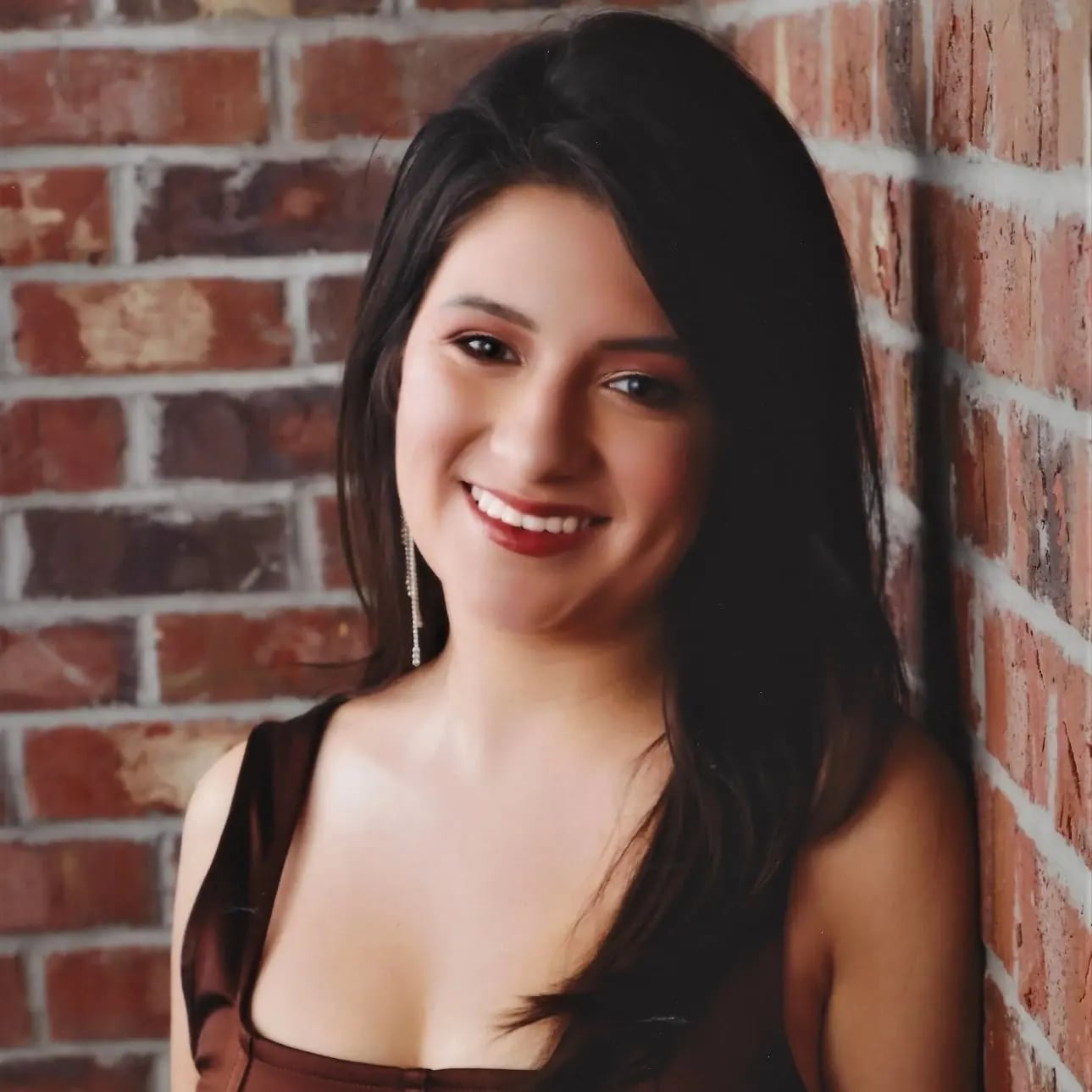
Now 21, Gabriela is finishing her sophomore year at Nova Southeastern University, majoring in speech-language pathology and communication disorders with a minor in psychology. She has been accepted into a dual-admission master’s program. She works as a student intern at a play-based therapy clinic. She manages her condition daily with a low-protein diet, amino acid supplements, and Revicti, taken three times a day after meals. She carries an emergency medication that can bring her ammonia down and sometimes keeps her out of the hospital. Stress can trigger spikes, so she monitors herself carefully. The last time she was hospitalized was her freshman year, twice, from the stress of adjusting to college.
For the Palacios family, there is no other word for what happened to Gabriela than a miracle. A secondary miracle, perhaps, was how the family managed to afford the decades of testing, hospitalizations, and specialist visits that made the eventual diagnosis and management possible. Gabriela’s father has worked for the Florida state attorney’s office for over 25 years, and the coverage they receive through his employer is phenomenal. It covered the family throughout her childhood — including a $250,000 spinal surgery in 2019, for which the family paid roughly $100 out of pocket. That coverage extends to Gabriela until she turns 26. After that, she is thinking carefully about where she works and what benefits come with it. Her chosen field, speech-language pathology, is in high demand in schools and hospitals, both of which typically offer strong coverage. “Her career path,” her mother observed, “will kind of be dictated by where she can get coverage to maintain her care.”
What Gabriela wants people, especially doctors, to understand is simple: “Just listen,” she said, reflecting on how many times she has been received with skepticism. She still walks into emergency rooms today and has to explain herself and wait for someone to call her geneticist to understand what they’re looking at. The condition is invisible until it isn’t.
But she is not bitter about the years it took. She is clear-eyed, forward-looking, and already becoming the kind of clinician she needed as a child. “I’m thriving,” she said proudly. For others living with rare or undiagnosed conditions, she has a powerful message drawn from her own journey: “The same girl who once tested at a third-grade level is now preparing for graduate school. That is resilience. That is support. That is faith. That is family. LPI and UCD are part of my story, but they do not define me. Your diagnosis does not define you either. There may be moments when the darkness feels overwhelming, when hospital rooms, lab results, and educational labels try to tell you who you are. Do not believe them. With proper medical care, support systems like an IEP, determination, and faith, growth is possible. Progress is possible. Purpose is possible. Miracles are real.”
Add your voice to help us continue to push for the best health and health care for all.
SHARE YOUR STORY